
Abstract
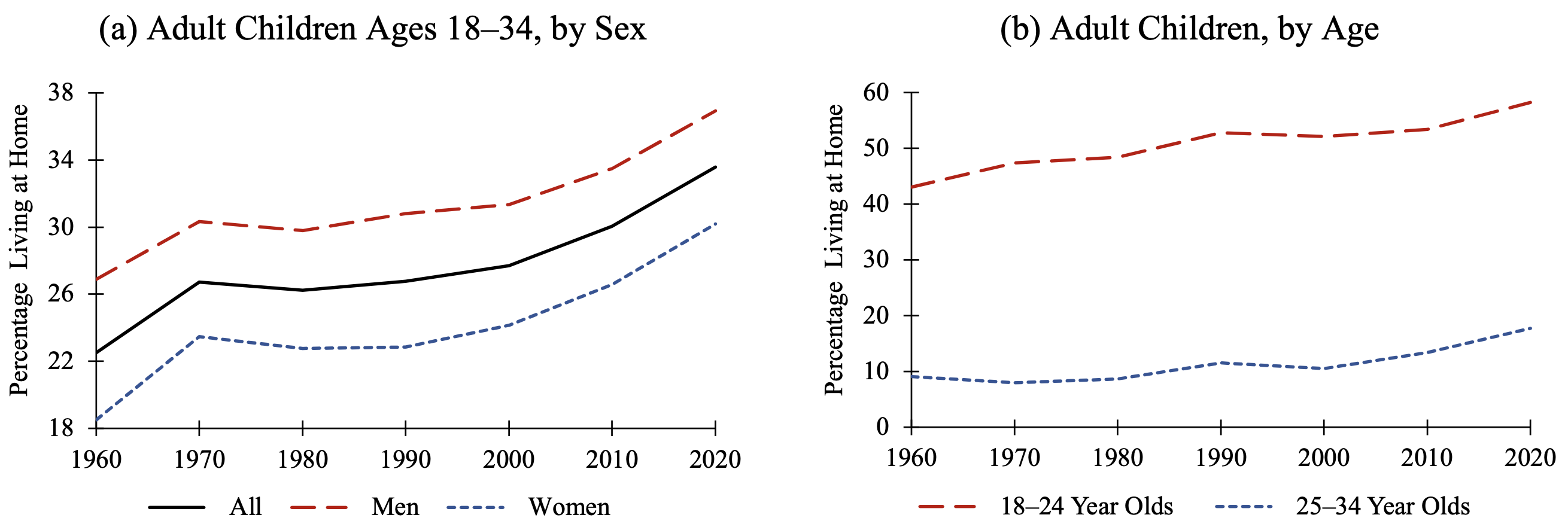
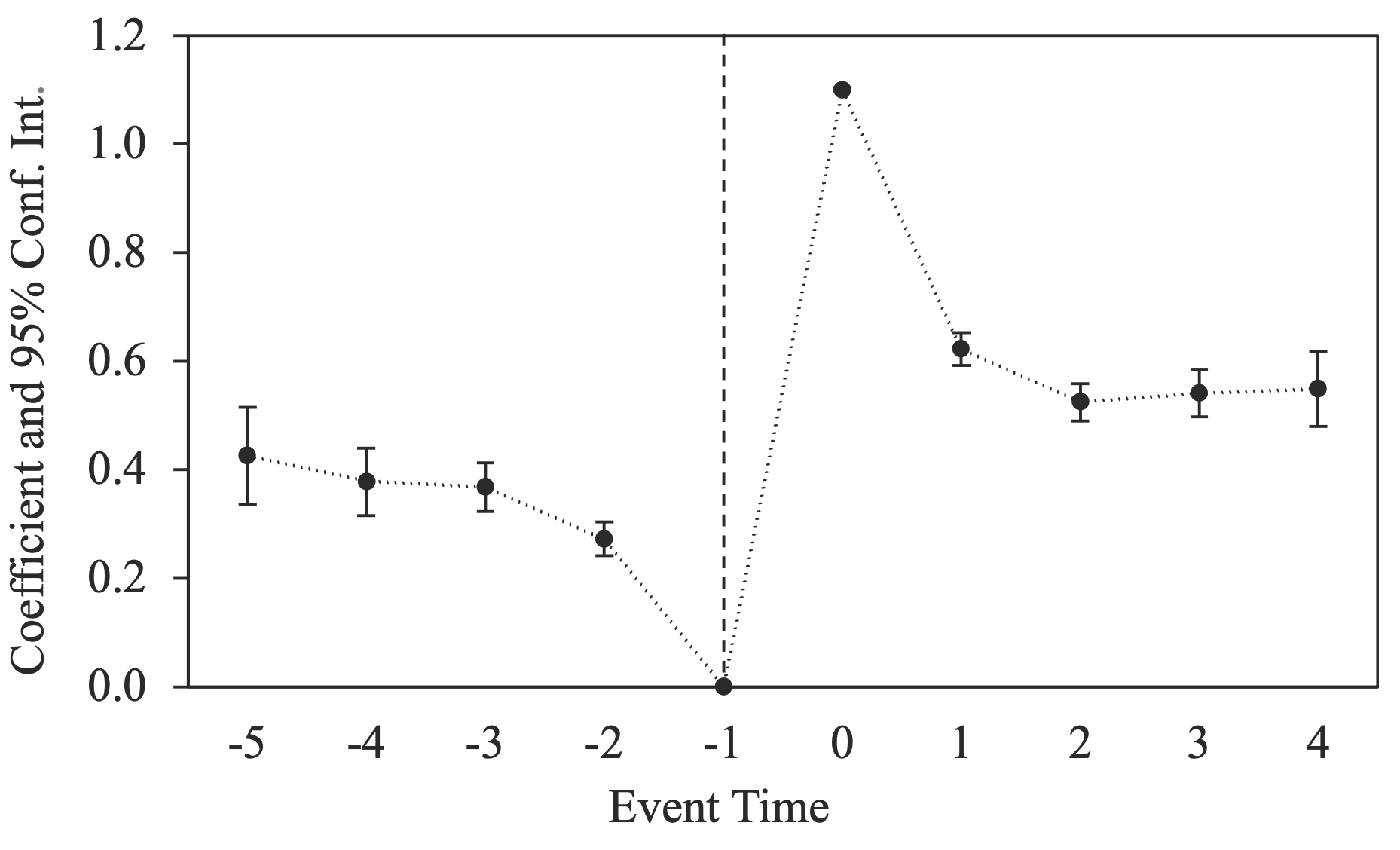
As the share of U.S. adult children living with their parents increases, it is important to understand how children who “boomerang” back home impact their parents in their pre-retirement and post-retirement years. We use data from the Health and Retirement Study (HRS) to examine the effects of boomerang children on their parents’ labor market expectations and choices, as well as on their wealth, health, and life satisfaction. Event study analysis suggests that boomerang children return home due to short-term instabilities, such as negative shocks to marriage, income, and employment. We find that boomerang children are associated with a small increase in their parents’ subjective probability of working after age 65, and with a temporary increase in their parents’ non-housing debt. However, in the aggregate, we find no clear evidence that boomerang children impact parents’ current or future labor market choices, overall wealth, health, or life satisfaction. (We do find some evidence of an increase in hours worked among parents in the bottom wealth decile). One possible explanation for the lack of aggregate impact is that boomerang children contribute to household expenses. We find that boomerang events are associated with an increase in financial transfers from children to parents, particularly among parents in the bottom half of the wealth distribution.
JEL Classification
- D1 Household Behavior and Family Economics
- I1 Health
- I31 General Welfare, Well-Being
- J1 Demographic Economics
- J26 Retirement; Retirement Policies
Key Figures
Citation
@article{SeiterLopezSlavov:2025,
    title = {Boomerang Children and Parental Retirement Outcomes},
    author = {Seiter, Grant M. and Lopez, Mary J. and Slavov, Sita Nataraj},
    year = {2025},
    journal = {Review of Economics of the Household},
    volume = {23},
    number = {1},
    pages = {31--69},
    doi = {10.1007/s11150-024-09707-8}
}This article is licensed under a Creative Commons Attribution 4.0 International License, which permits use, sharing, adaptation, distribution and reproduction in any medium or format, as long as you give appropriate credit to the original author(s) and the source, provide a link to the Creative Commons licence, and indicate if changes were made. To view a copy of this licence, visit http://creativecommons.org/licenses/by/4.0/.